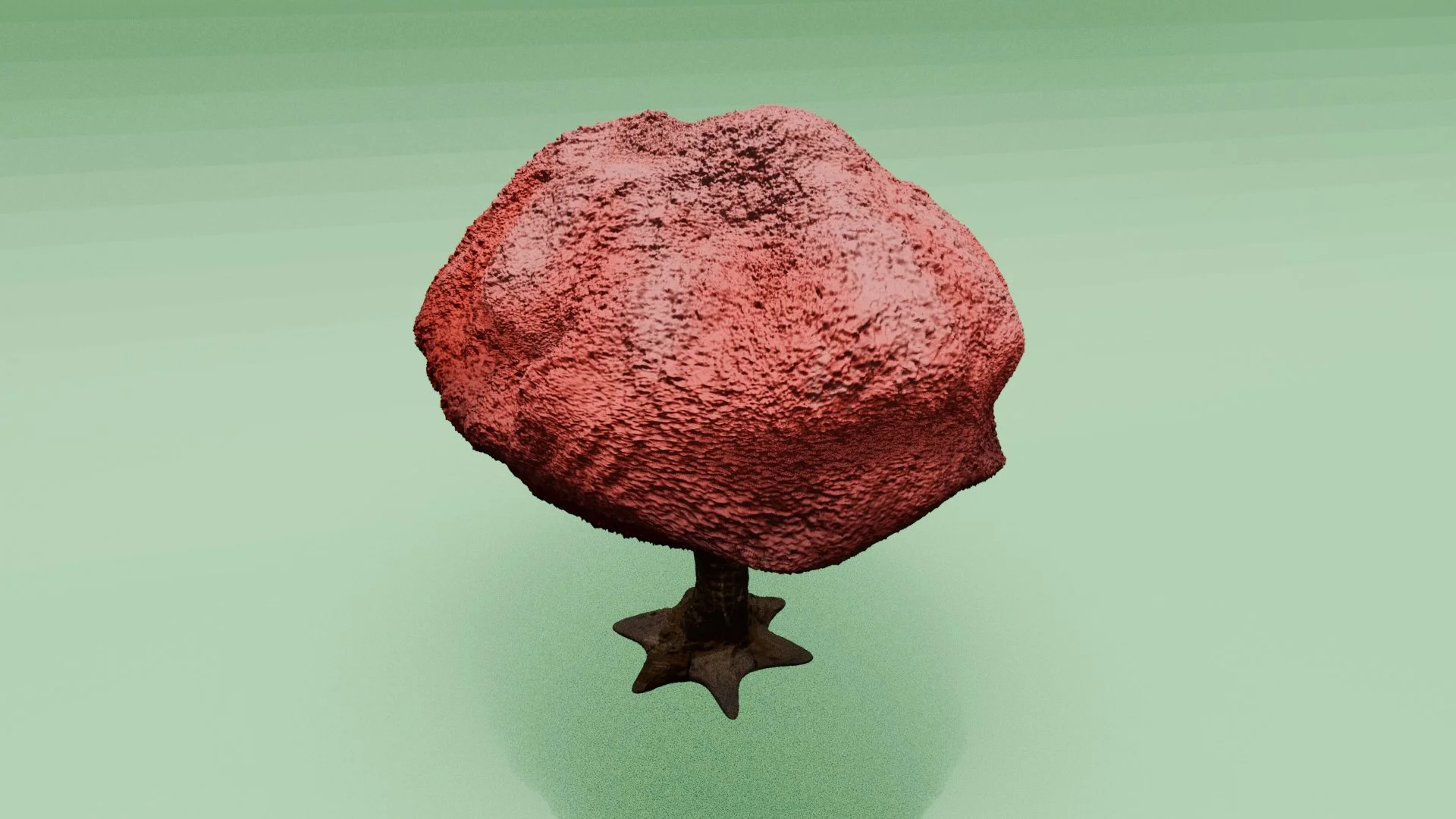
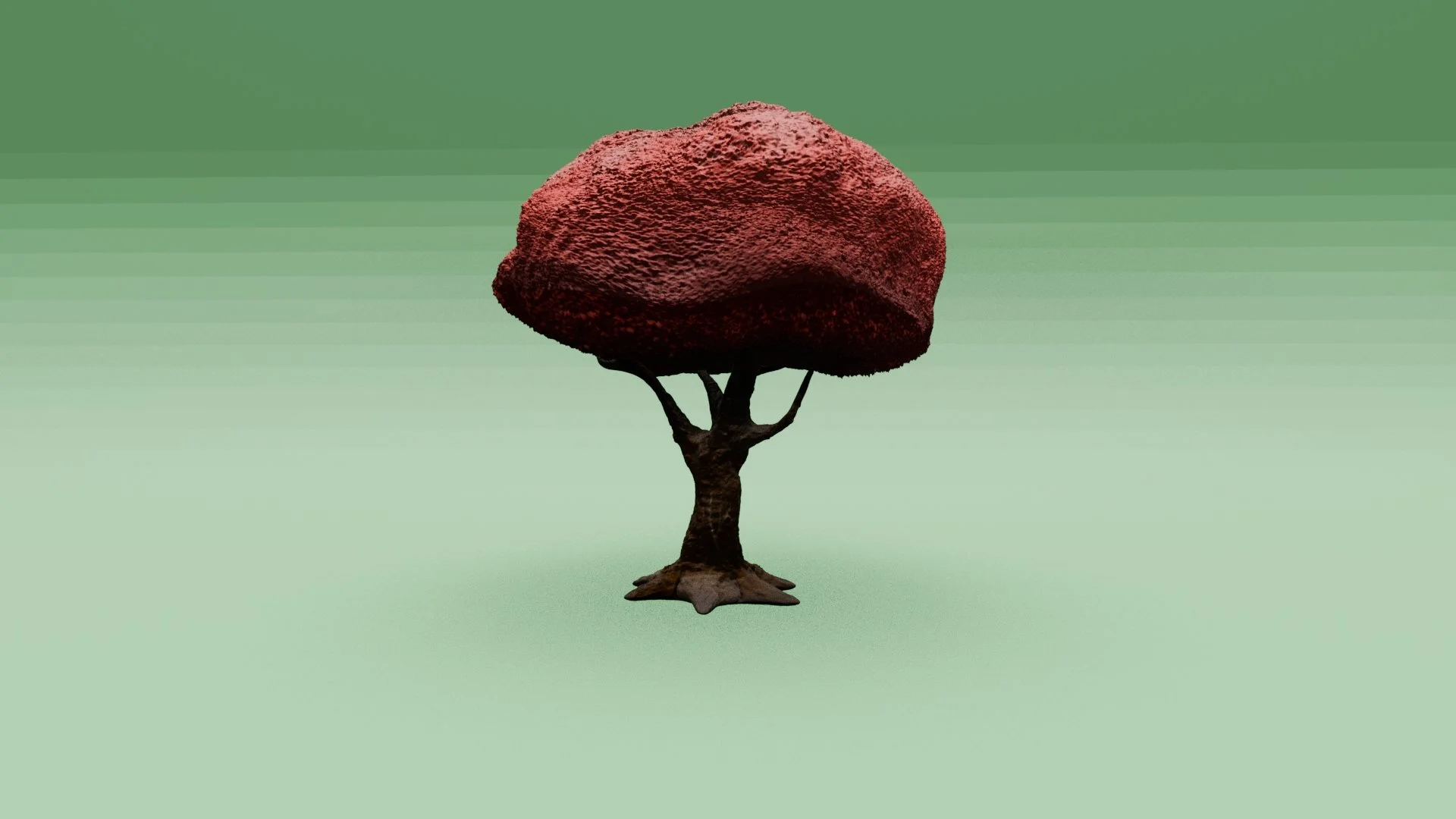
A 3D turntable of my Dream Acacia model, created in Autodesk Maya.
The Design Brief
For a project IMS 215 during my Senior Fall, I created an environmental asset. This asset was to be created for use in a video game, and so would need to be relatively low-poly in order to be utilized in an engine. This project required cross-platform flexibility, as I would be modeling the base mesh in Autodesk Maya, before sculpting and texturing the mesh further in Mudbox.
The Concept + Research
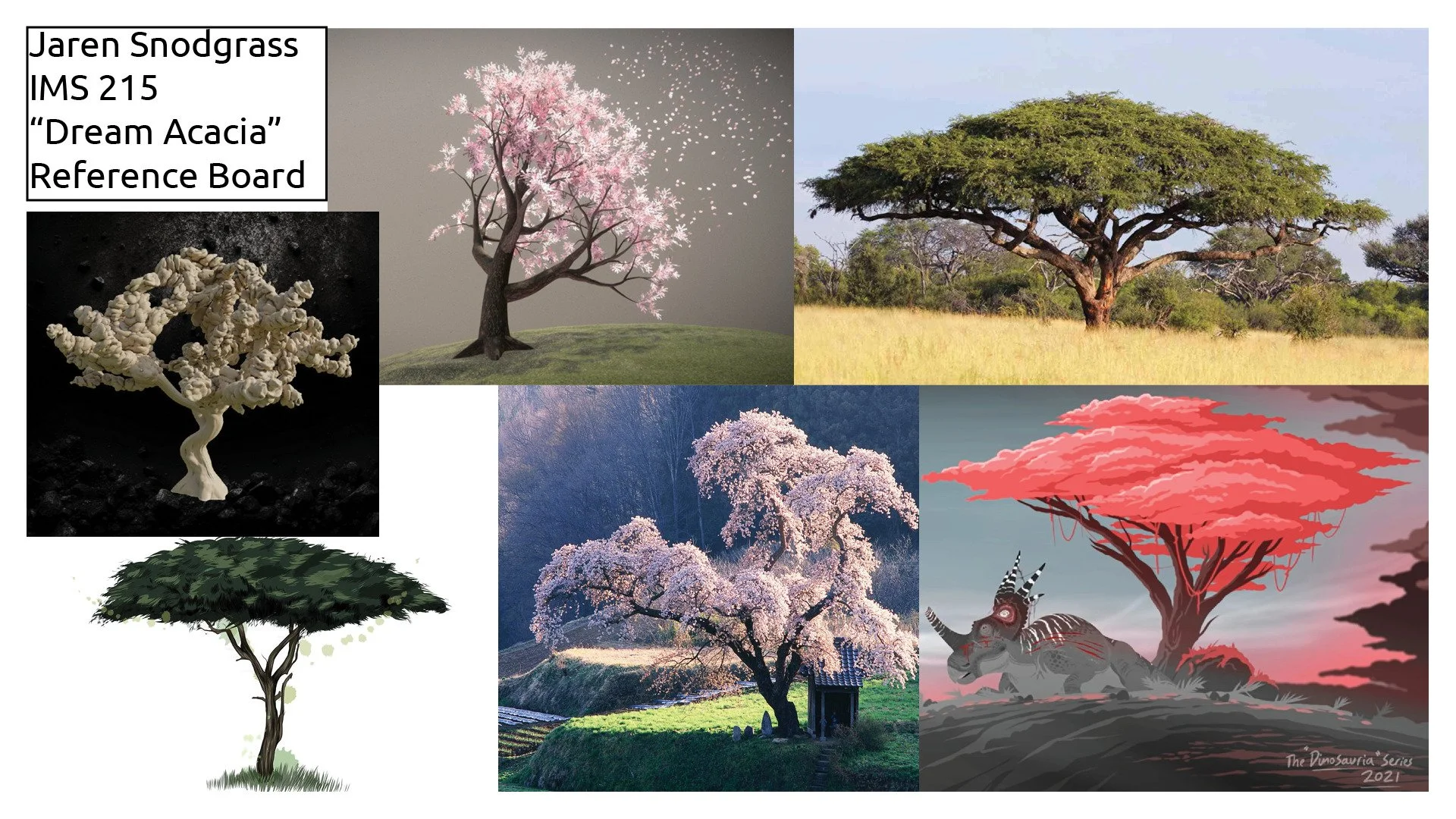
For my environmental prop, I wanted to challenge myself by modeling an organic environmental asset, something without obvious human symmetry or influence on it. Therefore, a tree seemed like a natural object to model for this project. I looked to nature for inspiration, and I found myself enamored with the shape of acacia trees, and the colors of the Asian cherry blossoms. Using both as inspiration, I decided that my tree would be a sort of hybrid between the two, with the tall umbrella shape of the acacia, and the vibrant pink blossoms of the cherry tree. This would create a sort of “Dream Acacia”, something I imagine existing outside of reality.
Gathering reference for my tree, I compiled some assorted images of acacia and cherry trees, ranging from real photographs, 3D models, and even illustrations. This allowed me a wide breadth of reference to base my model on, as I wanted to go for something with a dreamlike quality.
The Process
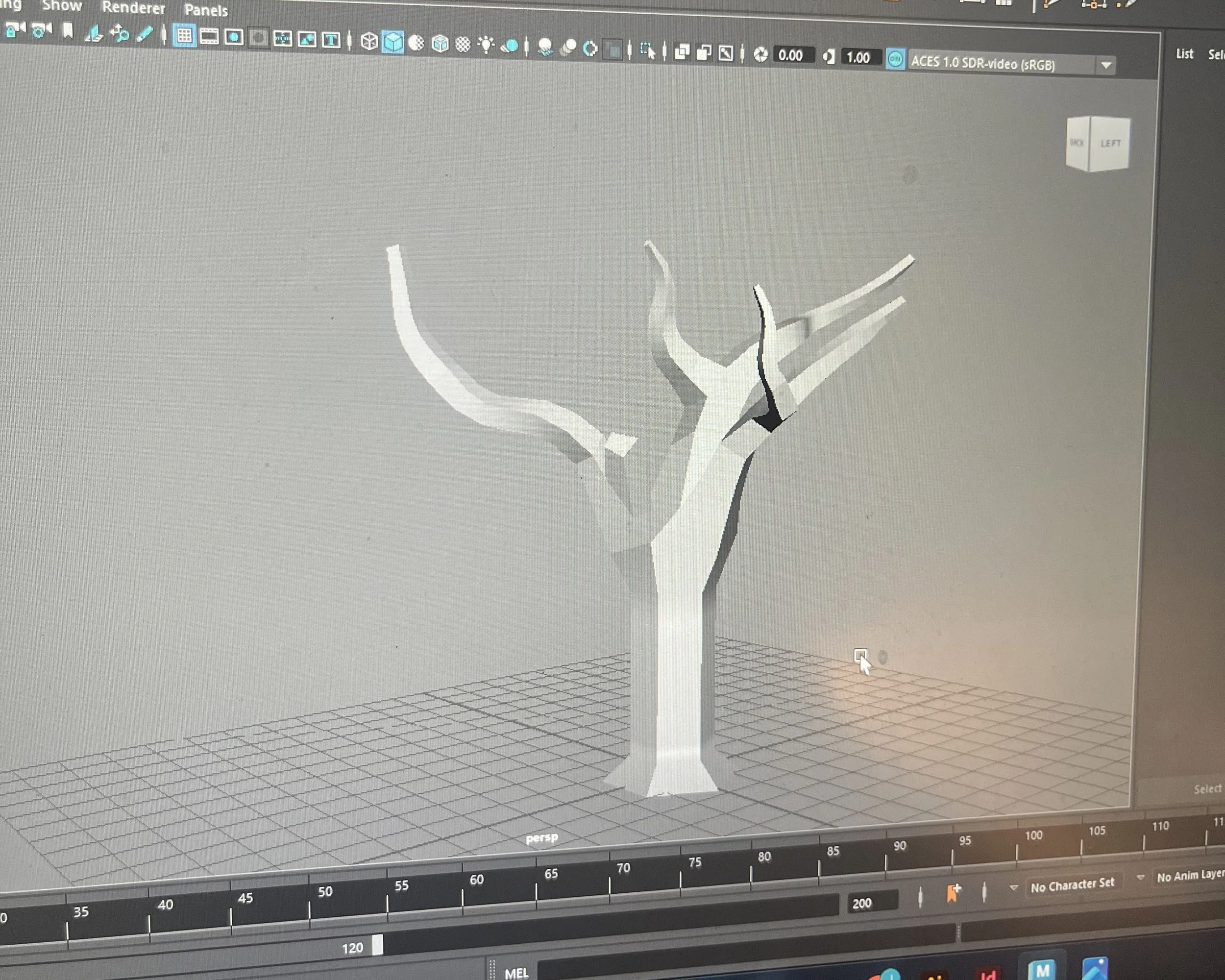
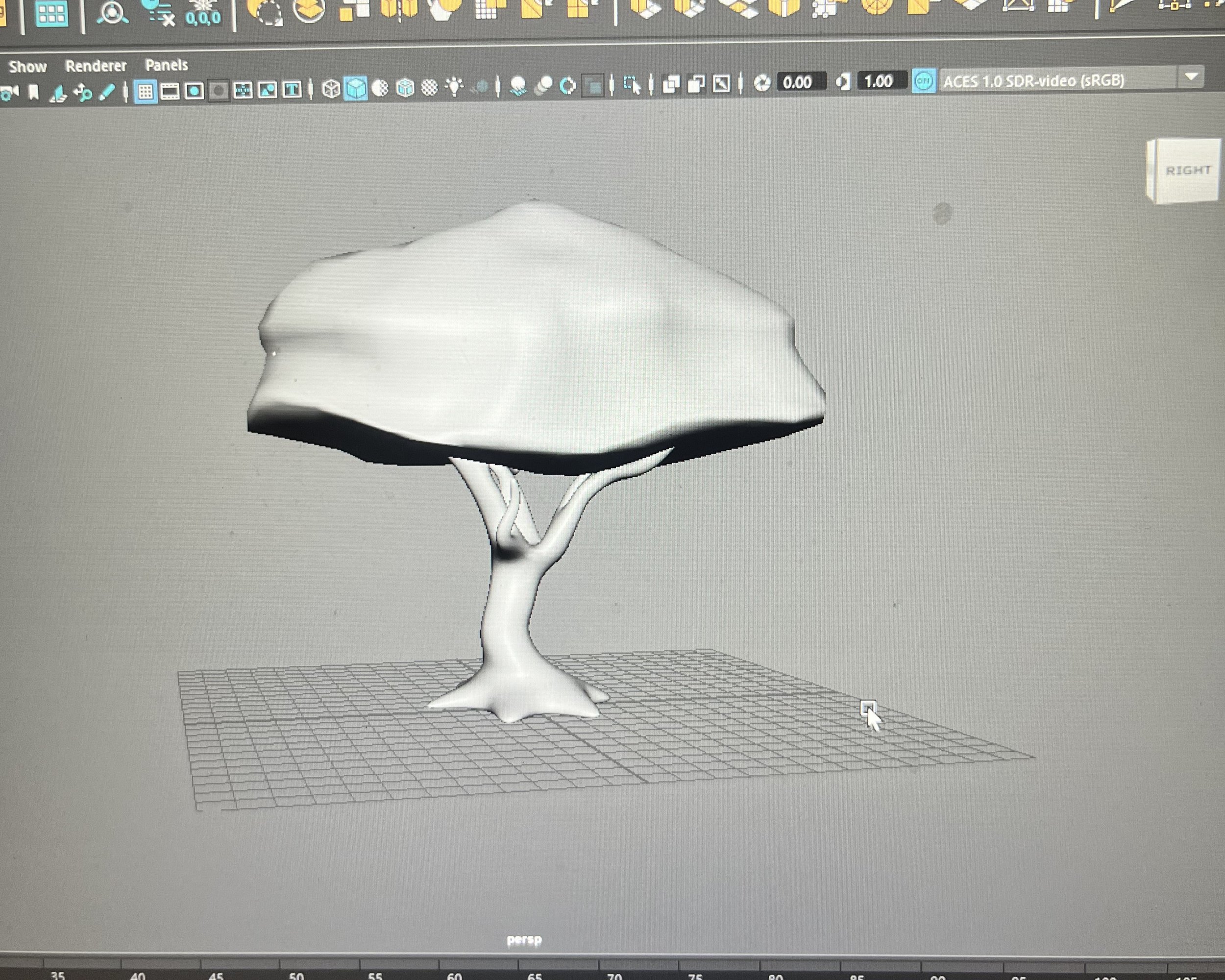
Using Autodesk Maya, I modeled the base mesh of my tree utilizing basic geometric shapes. The trunk of the tree was constructed from a hexagon, and then using a series of extrusions, I built out the different branches of the tree to create unique winding patterns. What I found myself truly enjoying about this process was being able to have fun with the shapes and sizes of my tree branches. As this was an organic shape, I didn’t have to worry about symmetry, and in fact the more chaotic the tree looked, the more convincingly “natural” it came across.
The canopy of the tree was constructed as a separate mesh, using a sphere with removed subdivisions and modified vertices. The greatest challenge would be to give the tree canopy a sense of depth: individually modeling each individual tree leaf would likely melt most computers, and also be incredibly time consuming. It seemed much more reasonable to turn the tree canopy into a single mesh, however giving that mesh the proper texture and depth would be important.
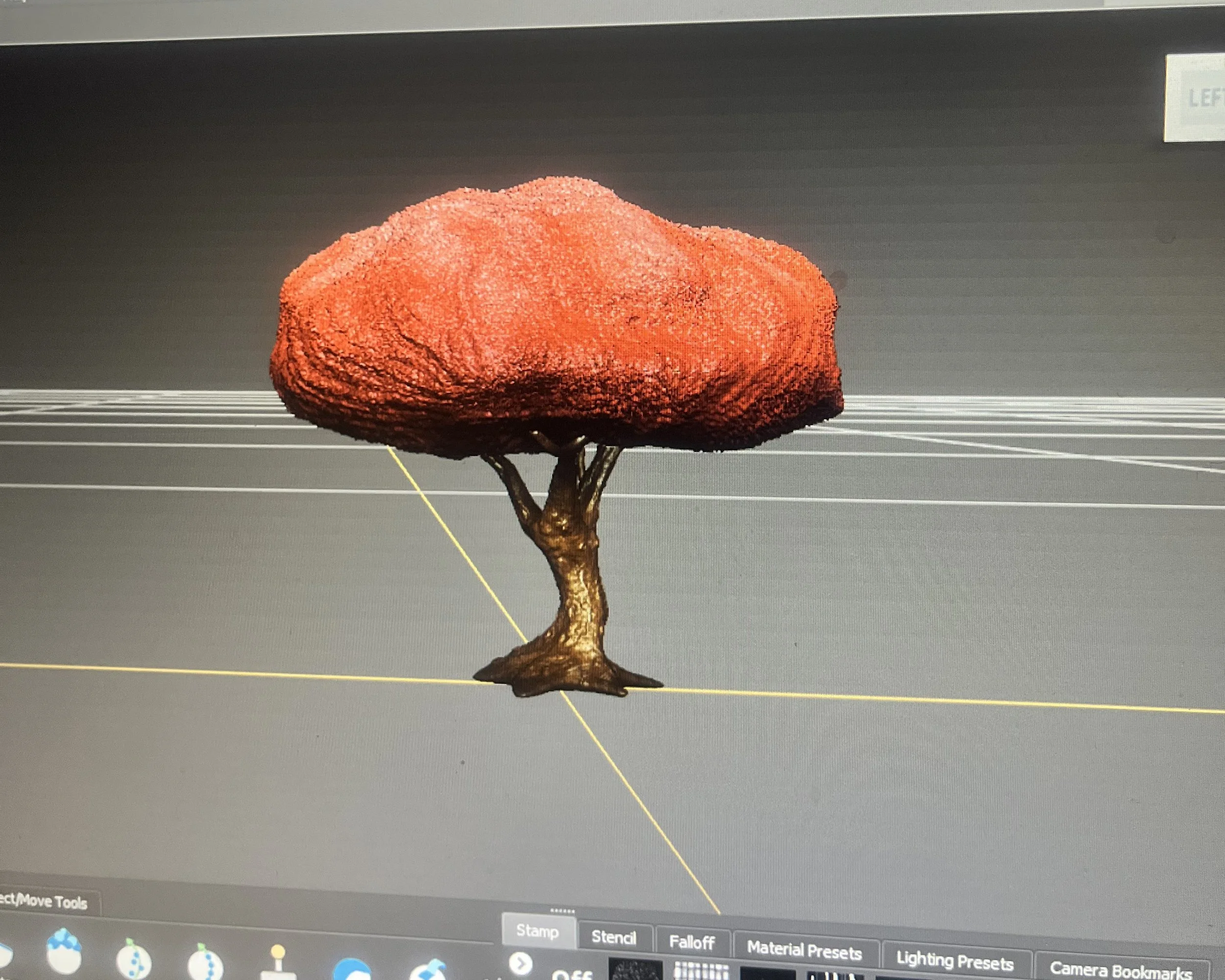
Transitioning over to Mudbox, I was able to give the tree some much needed texture and detailing that brought it to life. I added a rough wood texture to the trunk, following its growth pattern and implying a very aged tree as well. By extension, I added additional details like scratch marks, as I envisioned this tree being visited over the years by wild animals. The canopy in particular benefitted greatly from this additional detailing, as I utilized Mudbox’s “foamy” tool to disrupt the surface of the leaf mesh, and give the illusion of a dense canopy of leaves.
Once the sculpting was done, there came the task of texturing. I based the colors on those seen on cherry blossom trees, with bright pink petals and dark brown wood, with some slight variations of both colors to account for lighting as well. I feel this gave my tree a very distinct and serene look that felt almost ethereal in nature.
The Reflection
Modeling this tree taught me some very important lessons in cross-platform versatility and managing workflows when it comes to 3D modeling. Being able to model a base mesh in Maya before sculpting detail in Mudbox took significantly less time that it would have if I attempted to sculpt the tree from scratch. I feel this project taught me the importance of being flexible and managing two different softwares at once.
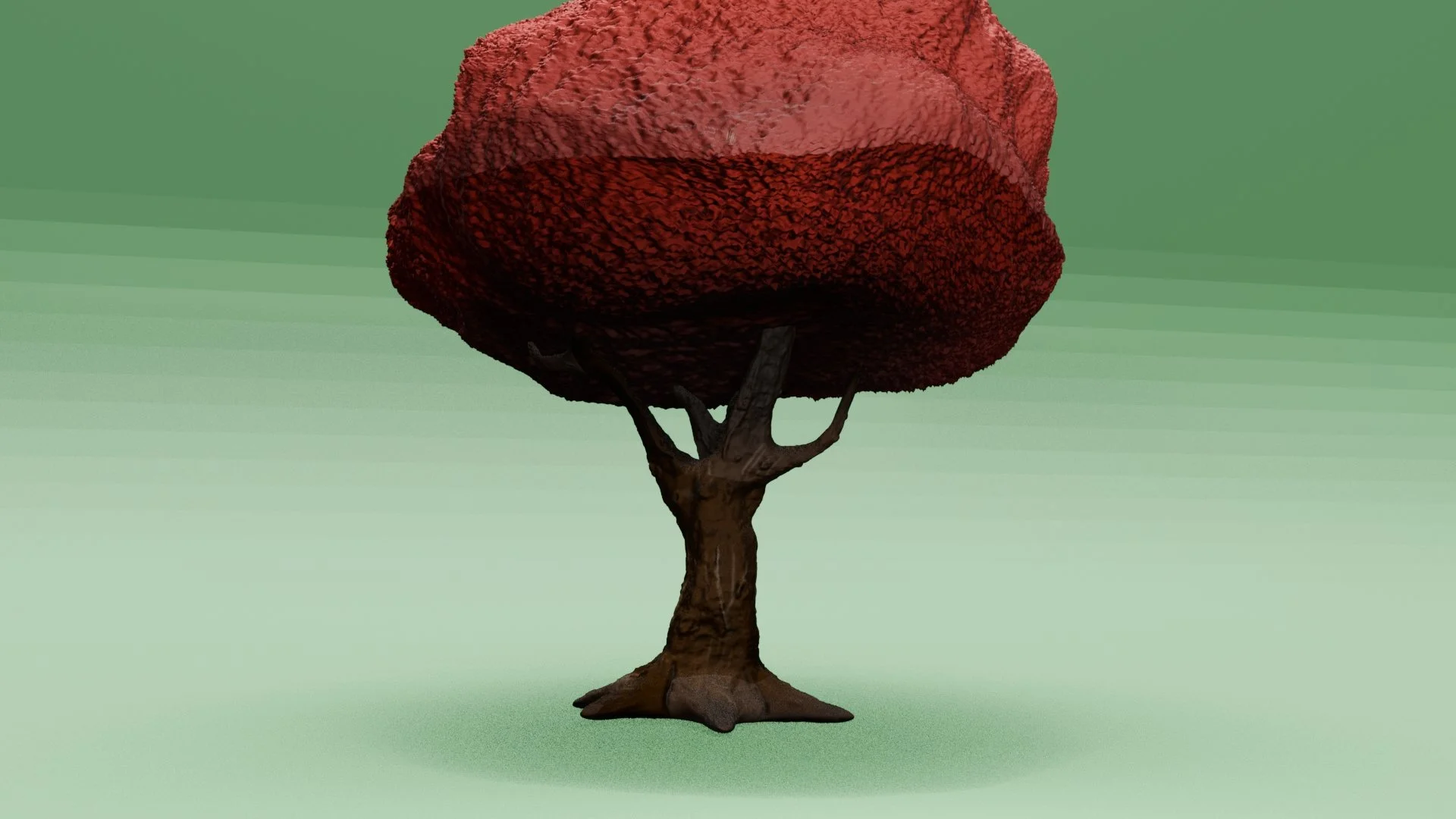
I also feel I appropriately challenged myself with the subject I chose to model. Trees are deceptively complicated structures, with distinct growth patterns, shapes, and textures that can be difficult to grasp in 3D space. I feel that this project allowed me to better explore novel structures when it came to modeling and sculpting, and I’m very happy with the end result.