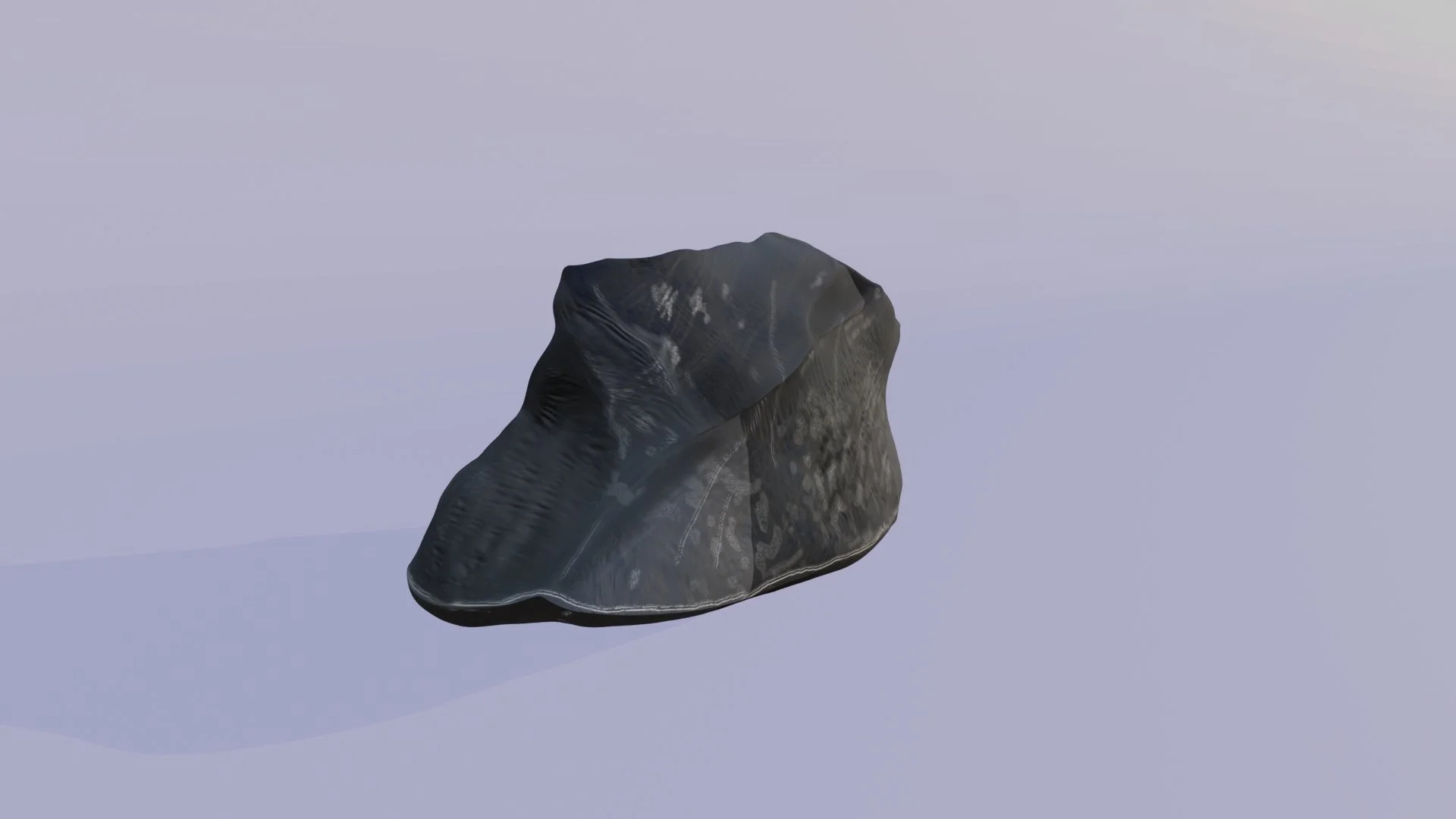
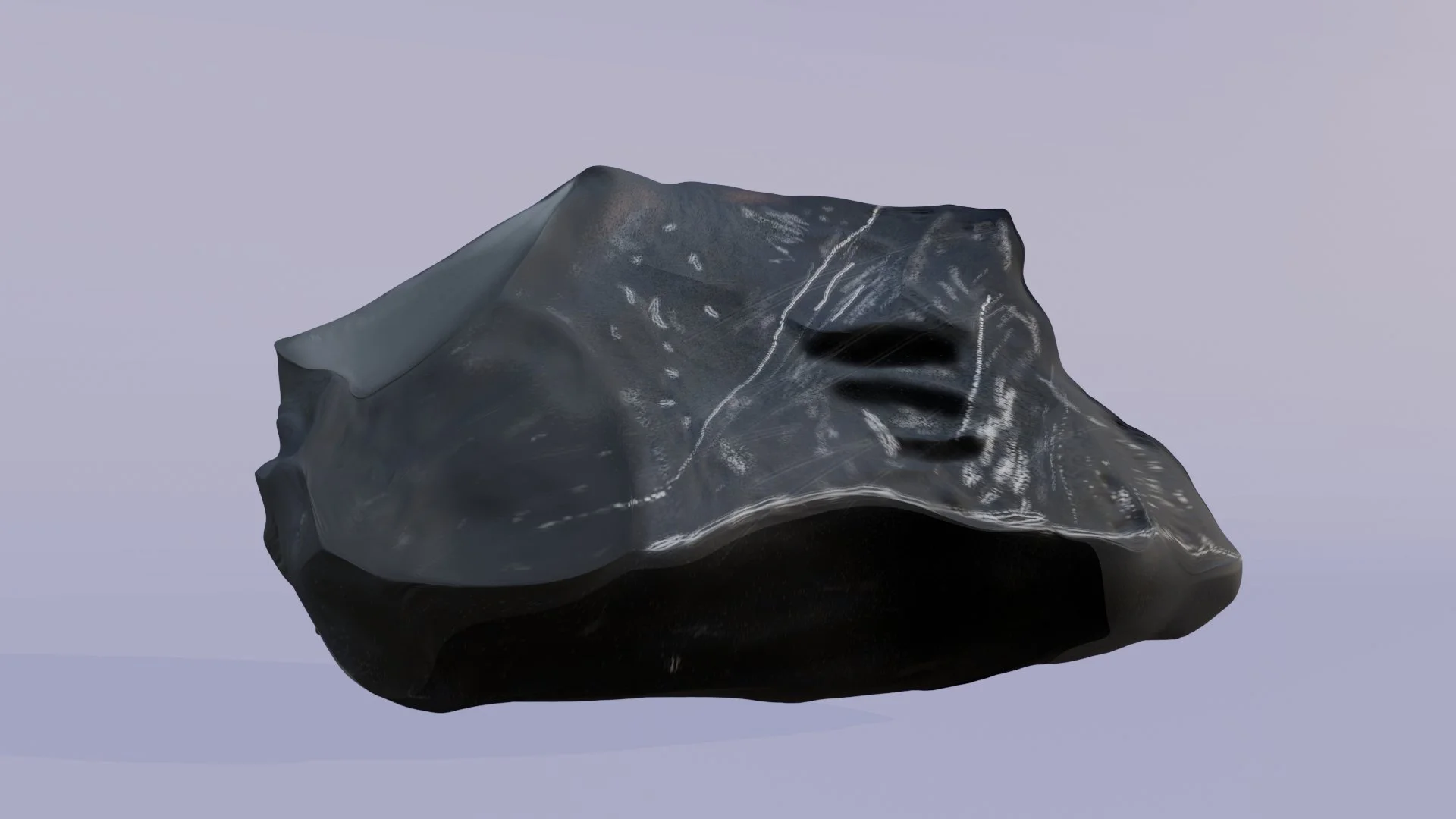
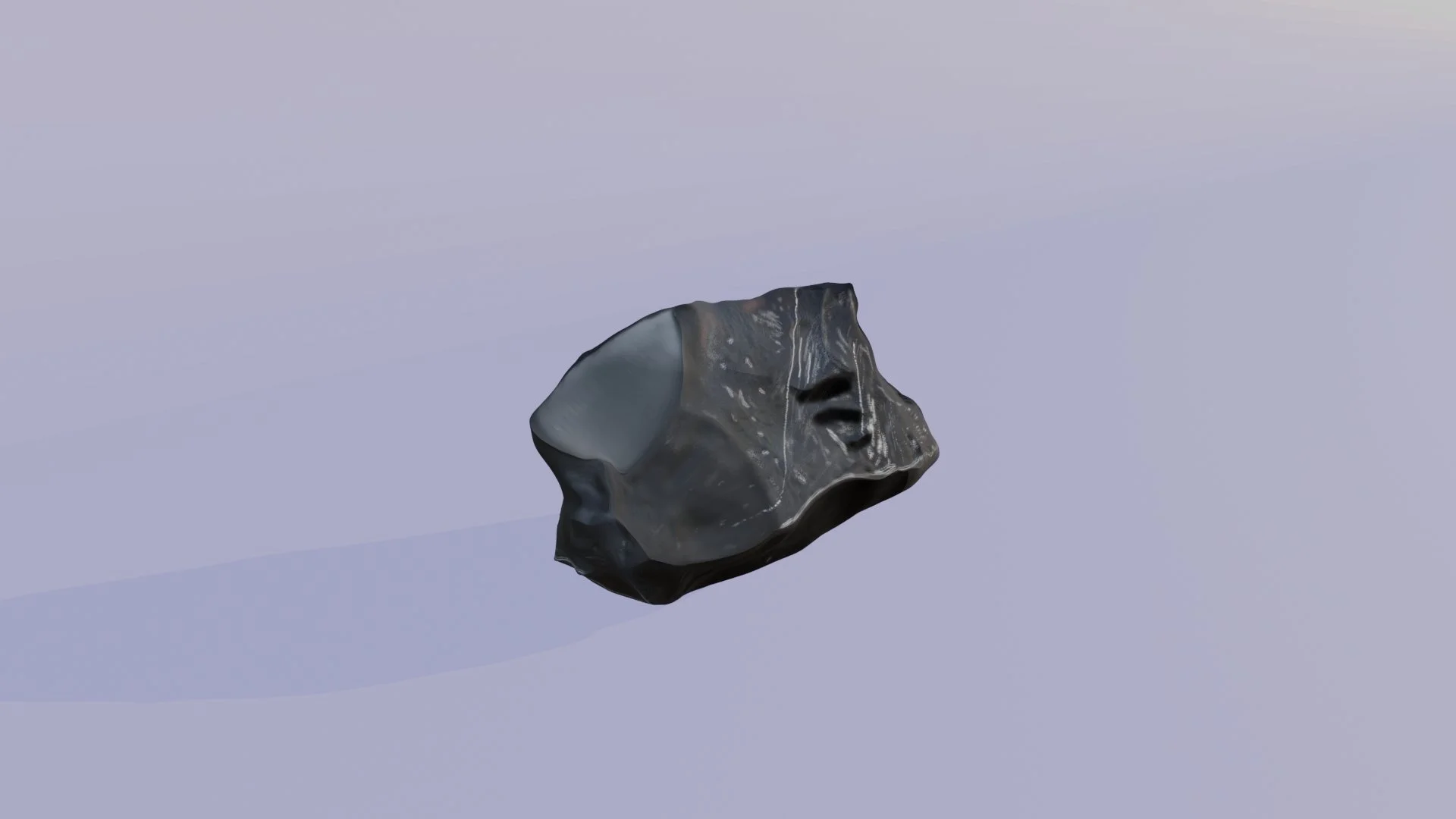
A turntable render of my Obsidian Sculpt, created in Blender.
The Design Brief
In the Fall of my Senior Year, I engaged in a project for IMS 215 to sculpt a rock of my choosing using Autodesk Mudbox. This would be my first project for the course, and my first real dive into sculpting with 3D software.
The Research
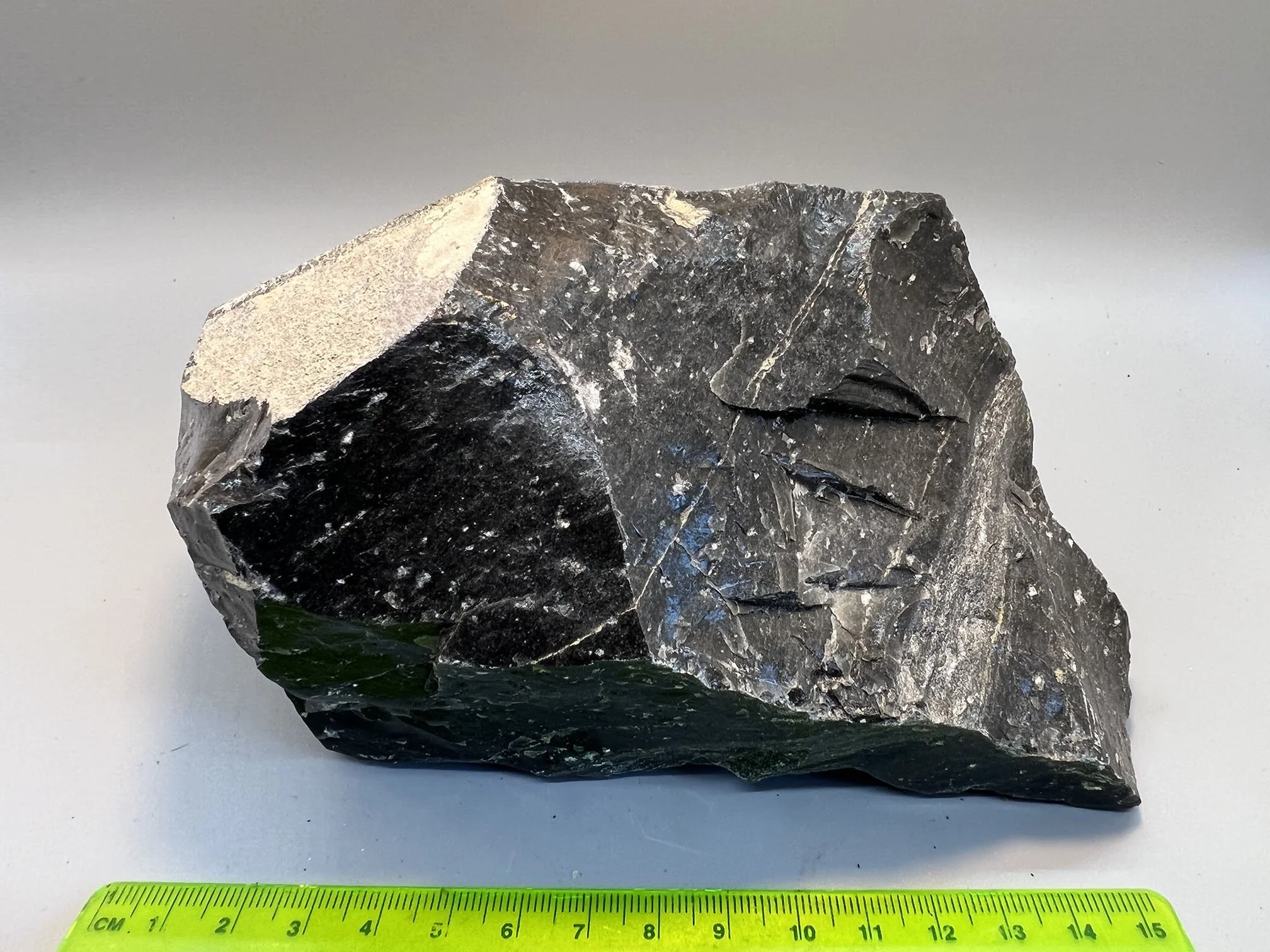
When I began researching the different kinds of rocks that exist, I wanted something that had a distinctive shape and texture. This being my first 3D sculpting project, I was intent on pushing myself and avoiding sculpting a rock that was too “basic. It was during this process that I became enamored with obsidian, a kind of rock that forms from the rapid cooling of silica-rich lava.
The colors, textures, and shape of obsidian are truly unique, with plenty of harsh, jagged edges and an almost glass-like quality to the internal material. I found a good reference image for my sculpt and began working in Mudbox.
The Process
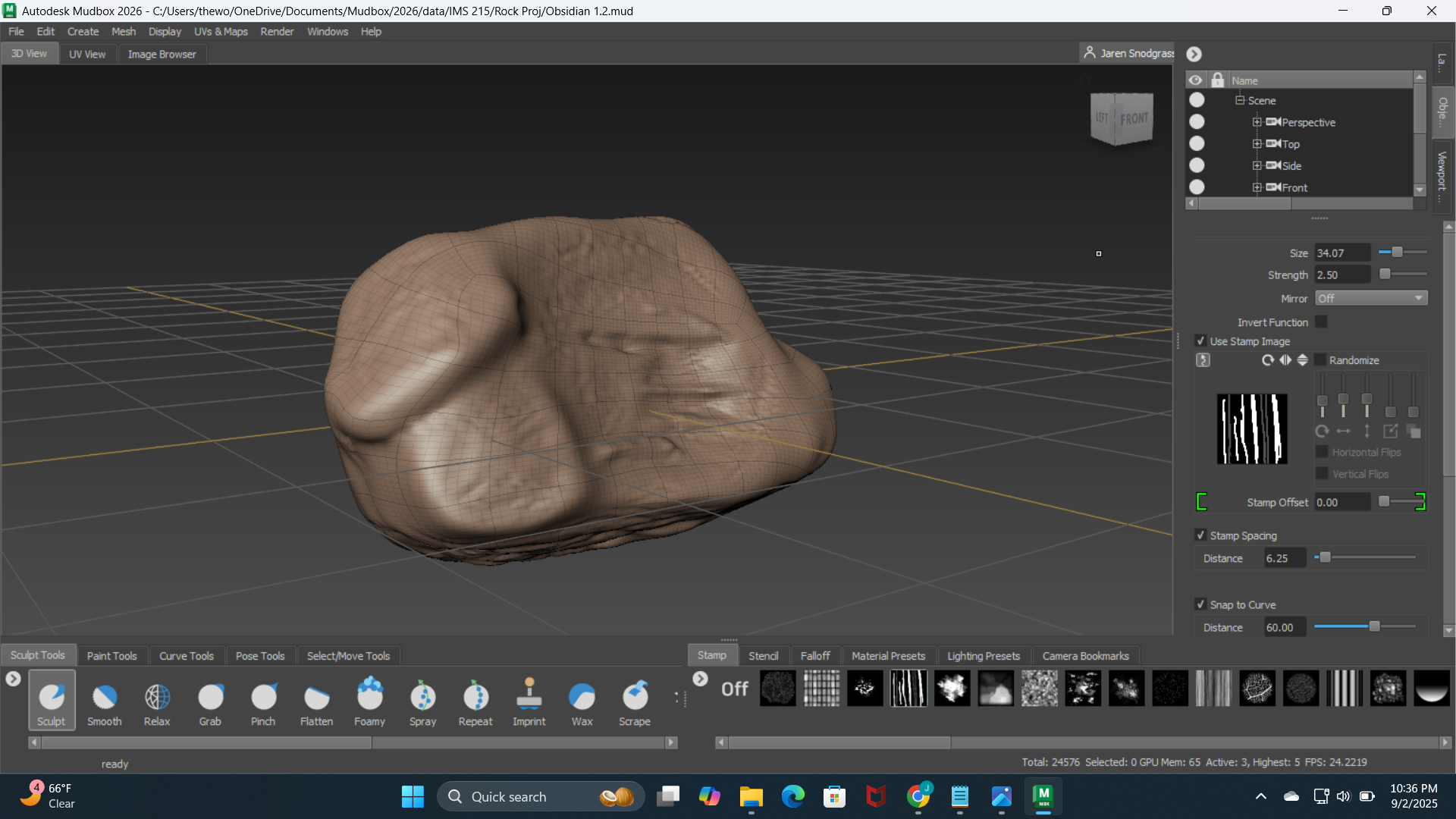
My obsidian rock originated from a basic sphere in Mudbox. From there, I would use the program’s different tools to try and mold the sphere into the shape that best resembled my reference image. Once the essential shape was settled, additional surface detailing was needed such as cracks, scratches, and wear. This helped the rock to feel more organic, utilizing visual storytelling to illustrate the ways in which the rock had formed over time.
Besides familiarizing myself with the software, one of the most difficult parts of this project was taking a reference image, which only depicted one angle of my chosen image, and interpreting how the rest of the rock would be formed. This meant not only understanding obsidian as a rock, but also a great deal of creative interpretation on my part in order to fill in the gaps and depict the unseen angles of my rock.
Once the rock’s essential sculpt was finished, there came the task of texturing. Utilizing multiple paint layers in Mudbox, I hand-textured my sculpt to best imitate the colors of the obsidian rock in my reference, including the discolorations caused by light reflection and the wear that was present on the rock.
The Reflection
In the end, I believe this project to have been a great first endeavor into 3D sculpting. Through this project, I was able to learn many of the core fundamentals of 3D sculpting programs, and familiarize myself with the tools that said programs offered. In hindsight especially, I see how many of those tools ended up being transferable, and the majority of what I learned in Mudbox has been utilized in other 3D softwares like Blender, Zbrush, and Maya.
All-in-all, I am able to look back on this first project with pride knowing that it taught me a wealth of skills, and laid a solid foundation for future creative endeavors in the 3D digital space.